

T2526A - Canary Islands and Madeira Winter Warmth
- pmh0606617
- Dec 12, 2025
- 14 min read
Most of the images used in this blog were taken during the cruise. Click on the images to view them at full size.
The Ocean Wildlife Encounters (OWE) team, Paul Hill, Dave McGrath, Christine Murdie and Lorraine Soulby joined Fred. Olsen Cruise Lines MS Bolette and her guests on the 17th November 2025 docked at Liverpool’s famous Pier Head in front of the magnificent waterfront. The team had a look for Harbour Porpoises in the river and Peregrine Falcons soaring above the world-famous ‘Three Graces’ without success before Captain Dubravica got us underway. Our sail-away from Liverpool was after nightfall so we were unable to point out any Grey Seals that are often seen on the sand banks just beyond the mouth of the Mersey opposite the ‘Another Place’ statues by Antony Gormley on Crosby beach.
Day 1 - 18th August – At sea; Celtic Sea
We awoke to rather cool and blustery conditions, a chilly Force 5 WNW wind had got up overnight making for a choppy sea. However, Paul and Dave hit the jackpot before breakfast while having a look-see check on the weather conditions for the 9am deck watch, when three Common Dolphins passed quickly by in the half light of dawn. It’s always a good feeling when the cruise’s ‘cetacean duck’ is broken, especially when that happens before breakfast on the first day! But would it be a portent of things to come?
Flocks of Guillemots were seen passing by and among them we spotted a few Razorbills, several Puffins sighted throughout the day added to the tally of auks. Small numbers of Gannets and Kittiwakes were also recorded along with a Cory’s Shearwater and, the best bird of the day, a Grey Phalarope speeding through the choppy waves into the distance. Over the course of the day a further 105 Common Dolphins were counted in several pods and Paul was lucky enough to have a brief sighting of a Minke Whale.

Day 2 - 19th November – At sea; Off the NW coast of Portugal
Our second sea day was much more pleasant with plenty of guests outdoors enjoying the improved weather conditions. It was tee-shirt sleeves weather with a stiff following northerly wind giving a light swell. We were now sailing over the ‘abyssal plain’ (colloquially known to OWE members as the Abysmal Plain) the sea here being over 3000m deep and in the absence of any underwater features there were no upwellings of nutrients from the depths to get a food chain started, consequently it was a hard day’s watching. The day produced only eight Common Dolphins (before breakfast again – just to get our hopes up!), another three unidentified dolphins and the blow from a Sperm Whale along with just a smattering of seabirds. Two Cory’s Shearwaters and three each of Manx and Great Shearwaters were the pick of the very limited sightings. The closest we got to a whale was a cloud that looked like a Humpback fluking.

However, all was not lost because there was some excitement aboard ship with some avian stowaways being found. Two Skylarks were seen flying around the upper decks several times but not seen to land unlike a very showy Snow Bunting and a slightly less showy Redwing that was seen to have a drink from Deck 8’s outdoor pool. A Song Thrush also briefly alighted on Deck 8. A strange day well out to sea where the number of species of land birds almost outnumbered seabirds!


For Dave, Lorraine had the most exciting find of the day when she pointed out the numerous By-the-wind Sailors, or Velella velella, which although looking like a small jellyfish are actually a free-floating colonial hydrozoan whose nearest relative is the infamous Portuguese Man-of-war. Only about 7.5cm (3 inches) long and looking very much like bits of foam in the ship’s wake they were incredibly hard to spot even when you’d ‘got your eye in’ and were impossible to photograph.
Day 3 - 20th November – At sea; Outer Straits of Gibraltar
Another day with a brisk tail wind but this time with welcome warm sunshine, a very light swell and excellent visibility. From a cetacean watching point of view we were thwarted, being over the very deep waters of the abyssal plain once again. As expected, it was another hard day behind the binoculars.
Most of the almost 100 Kittiwakes seen were this year’s youngsters, Cory’s Shearwaters numbed four dozen by the end of the day with just six Great Shearwaters and a single Manx Shearwater making up best of the rest.

As expected over the deep water cetacean sightings were very limited, resulting in only half a dozen Common Dolphins and an unidentifiable Beaked Whale seen by a guest. Another guest had the lucky sighting of a Loggerhead Turtle floating by close to the ship.
Once again there was a bird on board when a House Martin was seen by many guests doing a few circuits of the sunbathers around Decks 9 & 10 before disappearing off our stern.
Day 4 - 21st November – Funchal, Madeira
A port day of contrasts, warm along the promenade but cooler and drizzly up in the hills above town.
Sightseeing and excursions were order of the day for the guests and those that went on the Whale Watching tour were taken to see six Sperm Whales up close and personal.
The OWE team chose to take the cable car up to the Botanic Gardens with Paul and Dave lagging behind enjoying firstly a drive-by of some rally cars and then upwards of 50 Wall Lizards in the narrow park alongside the main road.


At the top of the hill the main target for the team were the Trocaz Pigeons which are endemic to the Laural forests of Madeira, unfortunately the weather had other ideas and visibility from the best viewing points was poor. Another endemic, the Madeiran Firecrest, put in a brief appearance annoyingly for us preferring to stay mostly hidden behind twigs and leaves. A small flock of Atlantic Canaries and a female Madeiran Chaffinch were much more showy. Some guests who had also made their way up the hill had good views of the male Chaffinch.


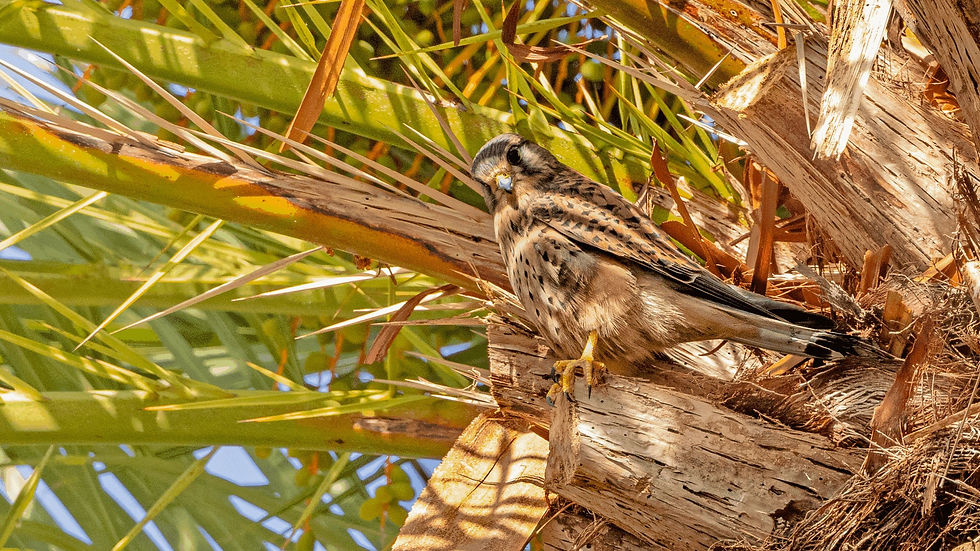
From the café we saw a pair of Kestrels and after yet another drizzly shower passed by and the sun came out four Plain Swifts left the shelter of their cliff-face crevices and shot down the valley. Sunshine also brought out an Island Darter, an endemic dragonfly very similar to our own familiar Common Darter.

Back down in the sunshine along the promenade we saw a Monarch butterfly and an Emperor dragonfly both of which are very colourful but not quite as colourful as the concourse of rally cars lined up for public inspection nor the plethora of rainbows seen during the day.

Day 5 - 22nd November – Santa Cruz de La Palma
Patchy heavy rain hindered watching across a choppy sea on the approach to La Palma. The last hour of the deck watch produced a small pod of dolphins approaching the bow which included a rare Rough-toothed Dolphin ahead of six Atlantic Spotted Dolphins. At sea two Leach’s Petrels were also seen. Approaching the harbour Lorraine was lucky enough to have brief views of a small pod of ‘Blackfish’ identified a little later as four False Killer Whales.

The OWE team spent the rest of the day aboard ship watching the Yellow-legged Gulls in the harbour go about their business during bouts of torrential rain.
Day 6 – 23rd November – Las Palmas, Gran Canaria
Before Bolette docked in Las Palmas the OWE team was called to an apparently injured bird on Deck 3. It turned out to be a Leach’s Petrel huddled against the wall but when picked up and inspected by Paul was found to be none the worse for wear just unable to take off in the tight space. A gentle push over the side into the wind saw it fly off unharmed.
Ashore, in the small Parque de Santa Carolina close to the quayside butterflies were order of the day with several Monarchs wafting around the treetops and tiny Long-tailed and African Grass Blues being seen low down in the flower beds below and an Emperor Dragonfly flying around the cafes. Also flitting around the treetops were numerous, frustratingly difficult to photograph, Canary Island’s Chiffchaffs, noisy Ring-necked Parakeets, a few African Blue Tits and Atlantic Canaries. A single male Spanish Sparrow had an evening sploosh in the fountain before retiring to roost.


On the way back to Bolette the team spent some time watching a couple of stunning Monarch butterflies fluttering around the flowers of some Carob Trees planted on the motorway underpass embankment, a beautiful scene in a rather unsalubrious location.

Day 7 – 24th November – Las Palmas, Gran Canaria
An overnight stay in Las Palmas gave the opportunity for a full day ashore. Fortunately for the OWE team there were still places on the dolphin watching excursion out of Porto Rico, about an hour’s coach ride away.
Under warm clear skies the Team and several guests set off on the charter boat across flat calm seas full of anticipation. Not too far out of the harbour shoals of Tropical Two-finned Flying Fish were encountered but we still had a fair way to go to meet up with the dolphins. Eventually we made our way towards another dolphin watching boat which was surrounded by as many as 200 Atlantic Spotted Dolphins and within a few minutes we were too were enjoying fabulous close-up views. Each boat is limited to only 20 minutes with the dolphins and as our time with them drew a close other boats arrived and the dolphins seemed to know it was time to go and visit them as they drifted away from us.


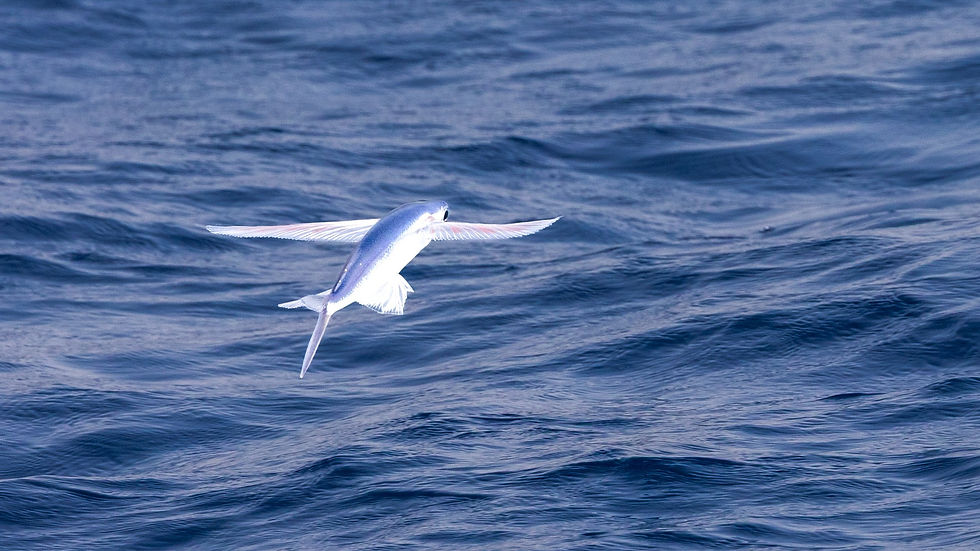
There was a speedy ride back to Porto Rico once again passing shoals of flying fish.
Cattle egrets wandering around a grassy roundabout were a bit of a surprise as the coach left Porto Rico. Other birds spotted on the drive back included a small number of shrikes, probably Southern Grey Shrikes, on the roadside wires, a Buzzard, a Kestrel and a Raven.
Day 8 - 25th November – Santa Cruz, Tenerife
Before disembarking, from the decks of Bolette we could see the rocks of the nearby breakwater were covered with dozens of bright red crabs.
As it was another port day the OWE team went ashore, once again the plan was to explore the nearest park, Parque Garcia Sanabria. Under the shade of the trees it was very pleasant and an enjoyable couple of hours was spent wandering the leafy paths. Monarch butterflies fluttered about as did a much more familiar Small White butterfly while above in the canopy several Canary Island’s Chiffchaffs zipped around and Blackcaps sang from hidden perches.
Towards the centre of the park there is a series of Lily ponds where a Little Egret stalked small fish and an Iberian Pool Frog peered out between the Lily leaves. A Kestrel graced us with its presence while we sat enjoying a welcome cup of coffee in the park’s café.
One of Bolette’s guests had great close up views of a Whimbrel probing around on the waterfront rocks as he explored the promenade.


An overnight sail away would see us on the island of La Gomera in the morning.
Day 9 - 26th November – San Sebastian, La Gomera
Another port and another pleasant day. Bolete was moored close to the small boat marina with a small beach beyond with a small, rather open, park around a modest fortress opposite Parque de la Torre del Conde. Somehow the OWE team managed to miss the collection of rowing boats that were about to undertake the challenge of racing the 3000 or so miles to Antigua in the West Indies. Our attention was more focused on the selection of fish to be seen around the jetties and pontoons of the marina. Most of them were Thick-lipped Mullet with a supporting cast of several of the sea bream family and a rather exotic looking Eastern Atlantic Trumpet Fish, shoals of the smaller sardine-like Bogues wandered around avoiding the bigger, although mostly harmless, fish. On the rocks above the waterline there were several dark black crabs which had extremely hairy legs, were they hairs or soft spikes? It was hard to tell but an interesting adaptation to something in their environment for sure.


On the edge of the beach we came across our first Berthelot’s Pipit of the trip, another endemic species found only on the Canary Islands.
Across the road the park seemed rather empty with just a few trees around the perimeter and a large mown area of grass in the middle. However, the trees offered shelter to many Canary Island’s Chiffchaffs that were infuriatingly difficult to photograph. One of the team’s target birds was African Collared Dove and eventually one was found after scrutinising dozens of the very similar Eurasian Collared Doves across all the islands we’d visited so far. A Desert Locust flew across the park while we watched a Bertholot’s Pipit running around on the grass.


After exhausting the possibilities of the park we headed back to the beach for another look at the Bertholot’s Pipits again, one of which was now exploring the seating area of the beach café. In the Tamarisk bushes beyond more Canary Island’s Chiffchaffs flitted around and a few Spanish Sparrows flew to and fro. A male Spectacled Warbler was a bit of a surprise find.

For those that braved the cold and blustery evening sail-away there were lovely views of Mt Teide enveloped in cloud over on Tenerife and a bit of a sunset out to the west beyond the jagged cliffs as two unidentified dolphins appeared out of nowhere and quickly disappeared along the side of the ship. A handful of Cory’s Shearwaters and a single Great Shearwater were the only birds seen in the gathering gloom.


Day 10 - 27th November – At sea; Off the coast of Morocco
The northbound sea day was mild and sunny but with a brisk headwind producing a choppy sea. As on the southbound part of our journey we were over the abyssal plain and a hard day’s watching ensued. Barely a bird and only 30 Atlantic Spotted Dolphins were recorded of the course of the day.

Far more exciting than watching the sea was the insect described to us by a guest as ‘like a cockroach’ found clinging to the ceiling along Deck 3. At first inspection it could have been a cricket but looking at pictures on the back of our cameras it was definitely a longhorn beetle of some kind. The internet later provided an identification, Penichroa fasciata, normally an inhabitant of the Mediterranean region, Asia Minor, Near East, Transacaucasia and Iran.

Day 11 - 28th November – At sea; Off Portugal
The conditions at sea had improved a little overnight and continued to do so during the day. We began the day with a stiff headwind and a choppy sea which gave way to much more benign conditions after lunch. The increase in cetacean sightings attests to the better conditions and the fact we also travelled over a couple of small underwater features; some might say at last!
Pods of Atlantic Striped Dolphins and Common Dolphins were recorded as well as several whale blows, of which at least one was from a Sei Whale.


Birds were still in short supply although provided probably the best sighting of the day when a guest managed to see and photograph a small flock of very distant Band-rumped Petrels. Best of the rest were an Arctic Skua and a Sooty Shearwater.
Occasionally, even when miles from the shore, man's disrespect of our natural environment is all too obvious - but we didn't expect to see a plastic garden chair to be floating in the Atlantic!

Day 12 - 29th November – Vigo, Spain
Bolette’s final port of call was Vigo on the north west corner of Spain. The day was cool and wet – very, very wet!
While guests went on their respective tours into the hinterland or explored the town the OWE team stayed aboard to avoid the weather. There was some good birding in the harbour to be had from the shelter of Deck 3.
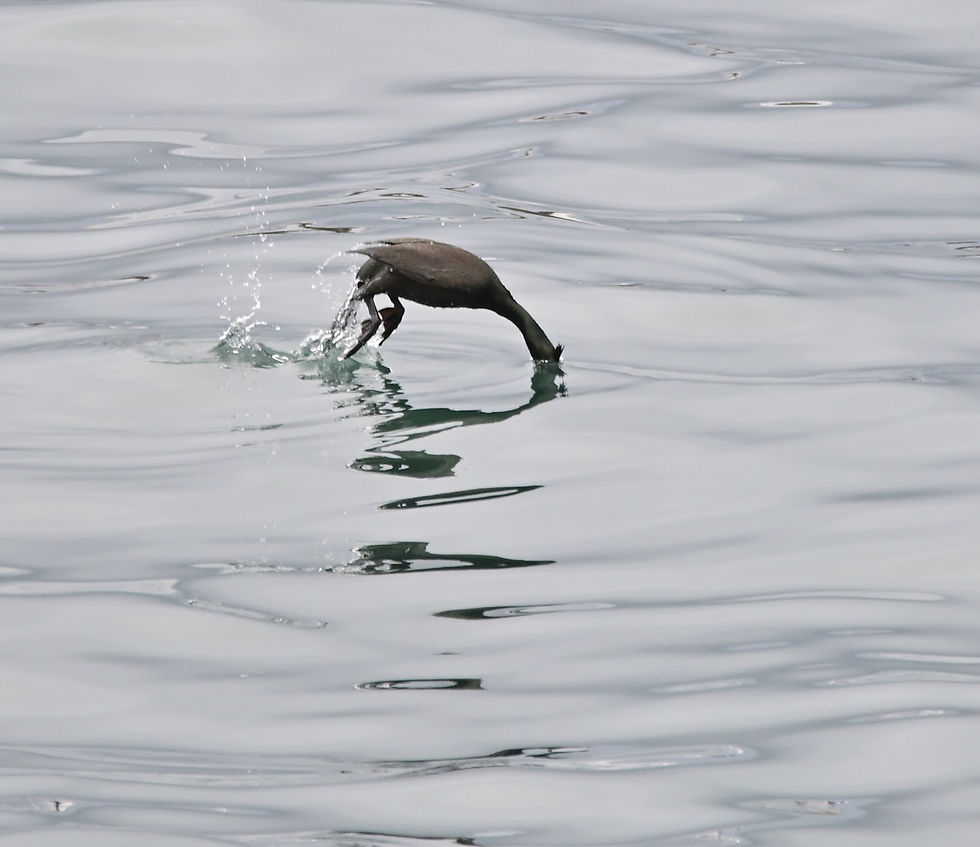
Yellow-legged Gulls flew around the quayside while a large flock of Black-headed Gulls sat on the water, among them were a good number of Mediterranean Gulls. It would seem they’d not had a good breeding season locally as only one young bird was seen. Also fishing in the harbour in good numbers were Shags, easily outnumbering the few Great Cormorants noted. A juvenile Gannet diving for fish was seen by a few guests.


A small green area on the quayside off Bolette’s stern held a flock of House Sparrows, a couple of White Wagtails and a Black Redstart. Further away, up the hill around the castle, Woodpigeons, Carrion Crows and Magpies could be seen flying over the rain-soaked rooftops.

Our sail away was a little before sunset so we had a chilly hour out to the open sea. Sandwich Terns were seen as we passed the huge Mussel farm on the starboard side. A guest told us they’d seen dolphins while on their tour of the farm but weren’t sure which species they might have been.
Day 13 - 30th November – At sea; Outer Bay of Biscay
Two sea days were ahead of us before docking in Liverpool early morning on the 2nd. The first was mild, but with a bit of a headwind chopping up the sea. Once again we were over the abyssal plain and expectations weren’t high. A total of only 36 Common Dolphins were counted during the day. About 100 Kittiwakes were seen, many of those in one feeding frenzy. Other than those only a handful of birds were seen all day, five Gannets and singles of Great and Cory’s Shearwaters with another unidentified shearwater, that was it!

After lunch things picked up a bit with a Sei Whale being seen and passengers reporting a couple of whale blows at various times. A Sperm Whale was spotted and then a two more together. These two became three when our photos were reviewed.

An unexpected bonus was seen by Dave and Paul from the Earth Room while doing some catching up with ‘homework’, a Great Skua flew past us not too far away giving good views through the windows.
Day 14 - 1st December – At sea; Celtic Sea
Now we were back in home waters our final day broke with typical British winter weather; windy, mild(ish) and dreich with a very rough sea and very poor visibility. After an initial flock of Black-legged Kittiwakes and a possible Arctic Skua around breakfast time things quickly quietened down.
Small numbers of seabirds were seen with our first Fulmars of the trip, a few Gannets, a few more Black-legged Kittiwakes and the odd Guillemot here and there. Not much to write home about but then the conditions were far from ideal. A European Storm Petrel broke the mould, easily winning title of Best Bird of the Day.
As the day progressed Common Dolphins started to appear, first a pod of two dozen, the 15 more, another single may have had some unseen friends and finally a pod of 10. About 50 for the afternoon wasn’t a bad tally in the awful conditions.

Afternoon tea beckoned and as the light faded a pod of 10 Bottlenose Dolphins were spotted by Dave and seen crossing in front of the ship by several guests from The View while enjoying their tea and scones. A last minute new species for the cruise: A cracking finale to end the trip.
Here’s a table of all the sea mammals we saw during the cruise:
SPECIES | TOTAL |
Atlantic Spotted Dolphin | 266 |
Common Dolphin | 192 |
Striped Dolphin | 20 |
Common Bottlenose Dolphin | 10 |
Sperm Whale | 5 |
False Killer Whale | 4 |
Dolphin sp | 2 |
Roqual sp | 2 |
Sei Whale | 2 |
Common Minke Whale | 1 |
Fin Whale | 1 |
Rough-toothed Dolphin | 1 |
Grand Total | 506 |
Acknowledgements:
The Ocean Wildlife Encounters team would like to thank Fred. Olsen Cruise Lines, Captain Dubravika and his crew of MS Bolette for their support and looking after us so well.
Most of all we would like to thank all those old and new friends who took the time to share the incredible wildlife that helped make for such a memorable cruise.
Your Ocean Wildlife Encounters team – Christine, Dave, Lorraine and Paul.


Comments