

S2603 Exploration of South America and the Antarctic Leg 3, Punta Arenas, Chile – Callao, Peru.
4th March 2026. Punta Arenas Harbour
Punta Arenas was the second changeover port for the OWE teams on Fred Olsen’s epic Exploration of South America and Antarctica cruise. Anno and Mikey departed Borealis early in the morning with James and Jean arriving onto the ship at lunchtime.
Once we had settled in and sorted out various onboard logistics, we ventured out around the Punta Arenas harbour for a quick look. We started seeing some classic southern Chilean species including Crested Ducks, Imperial Cormorants, Dolphin Gulls, Brown-hooded Gulls and South American Terns and several very confiding Dark-bellied Cinclodes, which showed well along the harbour shoreline.
Dark-bellied Cinclodes © James Phillips / OWE Dolphin Gull © James Phillips / OWE
A particularly exciting observation was to find the Sir David Attenborough research vessel, which is operated by the British Antarctic Survey, alongside Borealis. The Sir David Attenborough (AKA Boaty Mcboatface!) was being guarded by a decidedly large and very impressive growling sea lion, sitting upon a large tyre right next to the vessel!
The Sir David Attenborough © James Phillips / OWE The Sir David Attenborough © James Phillips / OWE "Growling" Sea Lion guard!! © James Phillips / OWE
Once back on board it was lovely to start meeting and catching up with some familiar faces around the ship. We also dropped into the Earth Room on Deck 5 during the evening to say hello and introduce ourselves as the new OWE team! We then headed to our cabins and bed, excited about the next two weeks and the coming days ahead in the Chilean Fjords!
5th March 2026. Chilean Fjords, Cape Desado to the Estrecho Nelson Channel
We were up bright and early and up on Deck 6 to find ourselves navigating through the Chilean Fjords.

Weather was variable as the morning progressed with showers and sunny intervals, but we soon started seeing numbers of Chilean Skuas, Black-browed Albatrosses and Southern Giant Petrels on the water and around the ship. Both Magellanic Penguins and Magellanic Diving Petrels were seen too, and a Northern Giant Petrel was a nice find in the fjords. The Chilean Skuas showed particularly well, at times coming close to the ship allowing for some great photo opportunities.
Chilean Skua © James Phillips / OWE Snowy Albatross © James Phillips / OWE Black-browed Albatross © James Phillips / OWE Southern Giant Petrel © James Phillips / OWE
We continued to travel along the fjords and the Estrecho De Magallenes where we logged good numbers of Kelp Geese dotted along the shoreline. Two huge Andean Condors appeared over the surrounding mountains with one bird lumbering across the fjord in front of the ship. Our first dolphins revealed themselves too, with five Peale’s Dolphins coming in close to the ship.
Before long we came out of the Estrecho De Magallenes and out of the fjords, past Cape Desado and into the open pacific. We then started to track north along the Humboldt Current, along the coast, but close to the shelf edge. Once out into the open sea, albatross, shearwater and petrel numbers quickly increased. Some exciting bird observations ensued with Sooty Shearwaters continuously in view with easily 5,000 counted through the afternoon, and good numbers of Black-browed Albatrosses, White-Chinned Petrels and 100 or more of Fuegian Storm Petrels seen. We also recorded our first two Salvin’s Albatrosses. Then in the early afternoon we saw our first great albatrosses of our leg, with a distant Southern Royal and then a reasonably close Snowy Wandering Albatross, which appeared and lingered in the wake of the ship!
Being in deeper water we also now started encountering larger whale species with seven Sei Whales seen and a further 15 Baleen whale blows recorded around the ship through the afternoon. The Sei Whales showed reasonably well from Deck 3 aft.
Soon our first very enjoyable full day came to an end as we headed back into the fjords and through the Estrecho Nelson.
6th March 2026. The Amalia Glacier, Chilean Fjords to the entrance of the Golfo Trinidad and the open Pacific
Wow! What a fabulous start to the day! Everyone awoke to find Borealis alongside the mighty Amalia Glacier. There wasn’t a breath of wind with the fjord like a mirror. The sunrise was stunning, and the light was perfect with the glacier looking resplendent under a beautiful blue sky with a backdrop of snow-capped peaks. The captain had maneuvered the ship to position Borealis so that we could get the best view possible of the glacier. Everybody on deck just took in the natural wonder of the glacier set within the Chilean Fjords. The photographic opportunities this morning were rather good to say the least!
Perfect Sea State © James Phillips / OWE Amalia Glacier © James Phillips / OWE
As we enjoyed the majestic views of the glacier, small groups of Peale’s Dolphins appeared close to the shore, their exhalations of breath hanging in the cold still air. Numerous Magellanic Penguins and Imperial Cormorants appeared around the ship with a rare Huemul (South Andean Deer) spotted on the shore, close to the glacier. After a couple of hours, it was time to start back down the fjord and continue our journey. Numerous Flying and Flightless Steamer Ducks and Kelp Geese were logged along the shores of the fjords with one Flying Steamer Duck having to move very quickly to get out from under the ship’s bow! Another small pod of Peale’s Dolphins was observed with numerous South American Fur Seal seen too. A Cocoi Heron was new and amazingly a Green-backed Firecrown hummingbird suddenly appeared on Deck 6 and made several circuits of the Ship, being spotted on Decks 3, 8 and 9 over the next few hours. It was very possible a second bird was involved.
Imperial Cormorants © James Phillips / OWE Peale's Dolphin © James Phillips / OWE Flying Steamer Duck © James Phillips / OWE
The beautiful weather continued through the morning and into the afternoon as we navigated our way through the wonderfully scenic Chilean Fjords towards the Golfo Trinidad. As we reached the entrance to the open pacific in the late afternoon, we came upon a large group of Black-browed Albatrosses sitting on the water with easily 500 birds present.
By early evening we were back out into the open ocean and again upon the Humboldt Current close to the shelf edge heading north. The numbers of seabirds quickly increased with Black-browed Albatrosses, Sooty Shearwaters, Fuegian Storm Petrels, White-chinned Petrels continually on view. A large pale headed skua quickly passed across the bow. The views were frustratingly brief, but a South Polar Skua couldn’t be ruled out.
The sea state was fabulous now, flat mirror calm - perfect conditions for picking out cetaceans and the next couple of hours didn’t disappoint….
We weren’t in particularly deep water, but we quickly started picking out numbers of distant Sei Whales feeding up ahead in front of the ship. Soon the ship arrived in the area where the Sei Whales had been feeding. The whales were still there and seemed completely oblivious to the presence of the ship and continued to lunge feed around the ship. The whales were at times very close, giving wonderful views from Deck 6 and from both the port and starboard decks. Often the whales were observed feeding together in small groups of 2-4 individuals. The animals were close enough that they could be heard lunge feeding and breathing with the exhalation of breath clearly audible as the animals came up for air.
The best part of this amazing observation was that so many passengers were able to connect with and witness the feeding Sei Whales, causing a great deal of excitement onboard.
Sei Whale © James Phillips / OWE Sei Whales © James Phillips / OWE
As the sun set, we realized we had just logged some 43 feeding Sei Whales over a two-hour period! Plus, another 31 rorqual whale blows were also logged. These individual animals were almost certainly Sei Whales, but we couldn’t specifically identify these other than seeing the exhalation of air coming from the animal’s blowhole.
It really was a great series of observations to finish a superb day of cruising on Borealis!
7th March 2026. At sea on the Humboldt Current to the entrance of the Ninulac Fjord
This was pretty much a full day of cruising the Pacific Ocean along the Humboldt Current on the shelf edge, and at times into deeper water. We moved between Decks 3 and 6 depending on the strength of the wind and direction to place ourselves in the best possible position to view wildlife.
From first light, seabirds very much featured, particularly the tubenoses – the albatrosses, petrels, and shearwaters.
White-chinned Petrels showed very well at times. But we only recorded three Westland Petrels which were the only birds of this species we saw for the whole trip.
We logged five species of albatross with the great albatrosses being a real feature of the day’s observations - Northern Royal, Southern Royal, and Antipodean Albatrosses were all seen well. It’s amazing to think that these Albatrosses have traveled all the way from breeding colonies in New Zealand and the Sub-Antarctic Islands, some 7,000 miles away to feed in the Humboldt Current.
Antipodean Albatross © James Phillips / OWE Antipodean Albatross © James Phillips / OWE Antipodean Albatross © James Phillips / OWE Antipodean Albatross © James Phillips / OWE Northern Royal Albatross © James Phillips / OWE Southern Giant Petrel © James Phillips / OWE
The Antipodean Albatrosses stole the show with several different birds seen close to the ship, with several birds sitting on the water giving passengers excellent views. During the late afternoon one bird appeared at the back of the ship and made several very close flybys viewed from Deck 3. At times, the albatross eyeballed the assembled passengers. To see these huge albatross species which with the longest wingspan of any bird so close was a very exciting encounter indeed.
As the afternoon progressed, we came closer to the coastline making our way towards the Ninulac Fjord. We were now in a very rich area of marine wildlife with the Guamblin Island National Park clearly visible from the ship. This area is part of the Chilean Fjords known for its resident population of Blue Whales and as if on cue our first Blue Whale of the trip appeared. The Blue Whale was only in some 100 metres depth of water. Other cetaceans were strangely absent, however at the same time as we were watching the Blue Whale, a passenger observed a large distant pod of Dusky Dolphins.
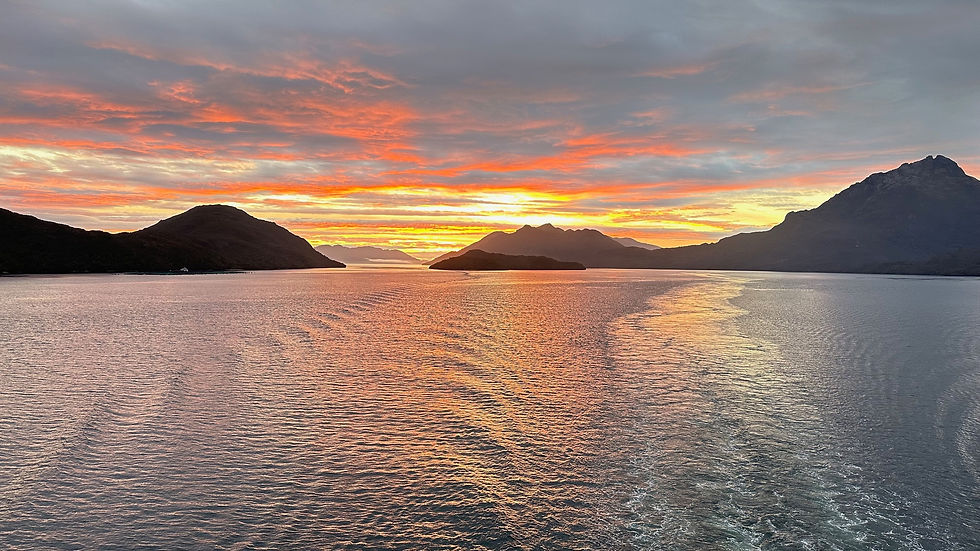
We soon entered the Ninulac Fjord with good numbers of fur seals around the ship. Two otters were seen in the wake too, which were thought to be Marine Otters. The sunset was just wonderful with a fabulous display from the back of the ship, ending a very enjoyable day of wildlife watching upon Borealis.
8th March. East of Chiloe Island and through the Chacao Channel to the shelf edge
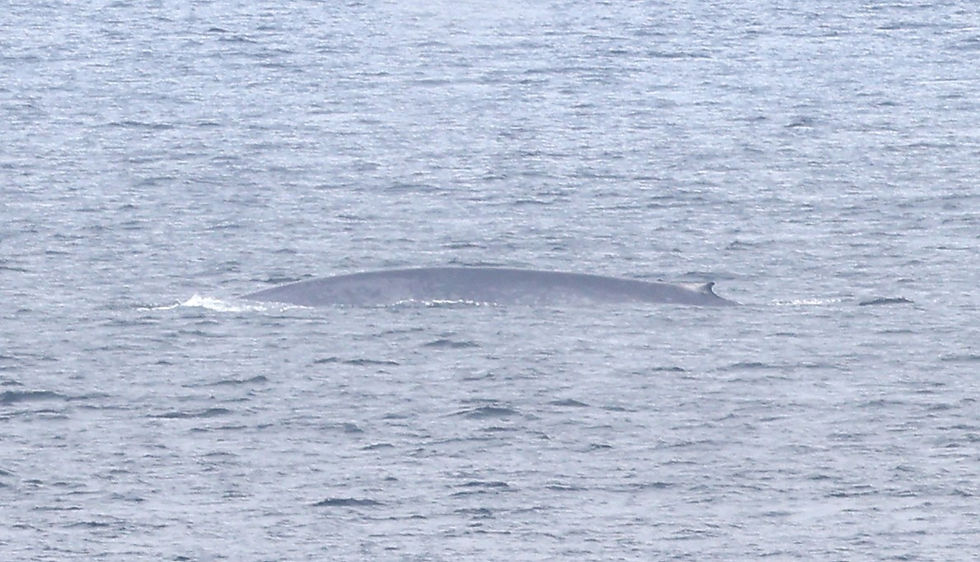
We awoke to find ourselves east of Chiloe Island in the Gulf of Corcovado, which is known to be a fabulous nutrient-rich feeding and nursing ground for a resident population of some 300 Blue Whales. Hence, there were high expectations for the day’s cruising on Borealis.
We were in position on Deck 6 at first light with mirror calm seas – perfect for observing any whales and dolphins which might be present. At times, occasional banks of sea mist started in, but this didn’t stop us!
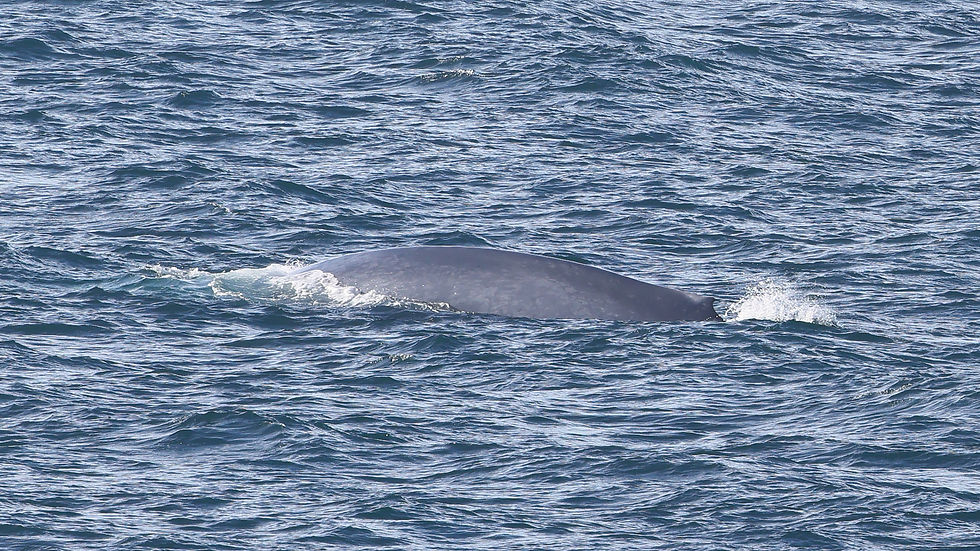
As luck would have it, the action started pretty much as the deck watch on Deck 6 began! Over the next two hours we were lucky enough to come across small groups of feeding Blue Whales and recorded some 15 different animals! A Fin Whale also appeared close to the bow and then at midday a small group of Killer Whales suddenly surfaced some distance from the ship but then frustratingly disappeared just as quickly into a bank of sea mist never to be seen again! We also recorded small numbers of Peale’s Dolphins and Dusky Dolphins. Birdwise, the mirror calm conditions allowed us to pick out good numbers of Magellanic Penguins sat on the sea. We also logged over 100 Pincoya Storm Petrels. A Green-backed Firecrown Hummingbird made several passes of Deck 6 allowing for some record shots to be taken. A Chilean Swallow also came to investigate the ship.
After an excellent morning session, expectations grew once more for our cruise through the Chacao Channel and out into the Pacific. In the past this area has been exceptional for marine wildlife with the upwellings of currents and the large numbers of seabirds, seals and sea lions breeding on the nearby Isla Dona Sebastiana…
And it did not disappoint! Everybody on Deck 6 witnessed a truly extraordinary gathering of seabirds as we passed through the channel and out into the open Pacific. Thousands of birds were present feeding all around the ship! The number of Black-browed Albatrosses present was breathtaking, and we estimated at least 12,000 birds to be present! Hundreds of Sooty Shearwaters joined the melee. Large numbers of Imperial Cormorants were present too. Other notable birds included Pink-footed Shearwaters, Red-legged Cormorants, Magellanic Cormorants, Magellanic Penguins and Peruvian Pelicans and best of all we logged 23 Sub-Antarctic Shearwaters, which was a particularly good record of this scarce shearwater species. It looked as if the albatrosses were feeding on the many thousands of jellyfish at the surface.
Green-backed Firecrown hummingbird © Ted Humphreys Nature Black-browed Albatross © James Phillips / OWE Pink-footed Shearwater © James Phillips / OWE Sooty Shearwaters © James Phillips / OWE
As we passed out into the Pacific the large numbers of seabirds continued to stream past the ship. We now had thousands of Sooty Shearwaters shearing over the ocean as far as the eye could see! By the end of the day, we estimated a minimum of 50,000 birds logged! Plus, thousands of Fuegian Storm Petrels too, with at least 4,500 birds seen, many close to the ship.
What a day of sightings - even as sunset and dusk came we were still logging new seabirds for the day, with Northern Royal and Salvin’s Albatrosses both recorded.
9th March 2026. At sea to Valparaiso
The wind was gusting moderately at first light and so we started the day viewing from Deck 3 port side. Seabirds featured strongly in the first couple of hours with numbers of Northern Royal and Salvin’s Albatrosses seen well from Deck 3. We also started getting our first really good views of Masatierra, Stejneger’s and Juan Fernandez Petrels and in good numbers. These three species of Pterodroma petrel are very characteristic of the Humboldt Current in this part of the world and it was great to see these birds constantly in view. Just as our seabird numbers started building rather nicely the fog rolled in and closed down our observations completely!
It wasn’t until 13:00 that the wall of fog cleared suddenly to reveal beautiful blue skies all the way to the horizon with no wind and a mirror calm sea! We quickly resumed observations from Deck 6 with a stunning sea state.
Almost immediately we started seeing dolphins and whales. A very large group of albatrosses and a large pod of 250+ dolphins were picked up feeding distantly off the starboard side of the ship. The feeding group were in the wake of a number of fishing boats. We were able to identify the dolphins as Dusky and estimated at least 7,000 albatrosses in the feeding group. Sadly, all the animals and birds remained distant.
As the afternoon progressed the fabulous sea state continued, allowing us excellent views of several Sei Whales and Fin Whales close to the ship and three more distant Humpback Whales. Two Fin Whales showed incredibly well from Deck 6 giving passengers wonderful views as the huge whales surfaced close to the bow, maneuvering to avoid the ship.
Fin Whale © Antony Sinclair Fin Whale blow © James Phillips / OWE Fin Whale © James Phillips / OWE Fin Whale © Ted Humphries Nature
Seabirds continued to feature with good numbers of Northern Royal, Salvin’s and Black-browed Albatrosses and White-chinned Petrels seen. We also found our first Buller’s Albatross of the trip. Large numbers of Fuegian Storm Petrels, often in groups sitting on the sea, were a feature of the day’s observations. Although not as many as yesterday we still had good numbers of Sooty Shearwaters and Pink-footed Shearwaters with us.
Throughout the afternoon, the high pitch flight calls of Grey Phalaropes were often clearly audible from Deck 6 and we regularly saw groups of this delightful shorebird lifting from the sea in front of the bow. We logged some 171 birds for the day.
Northern Royal Albatross © James Phillips / OWE South American Fur Seal © James Phillips / OWE White-chinned Petrel © James Phillips / OWE
It was worth noting that South American Fur Seals were a real feature on the day with at least 700 logged, with many groups of seals seen resting at the surface. Many passengers were asking why they were so far out to sea. Fur seals can spend long periods at sea feeding and can spend periods of up to 22 days at sea before returning to colonies.
As the early evening came in, we started seeing distant large rorqual blows on the horizon. As time went on more whales came into view. As we got closer, we were able to identify some these animals as Blue Whales! The whales kept on appearing with more Blue Whales identified and then large numbers of Fin Whales too. At times, the ship was surrounded by large rorqual whales! This caused great excitement on board with passengers on Decks 3, 6, 8 and 9 getting brilliant views. People dining in the restaurants and at the buffet couldn’t help but notice the large numbers of whales now surrounding the ship! As the sun set, we were able to take stock and look at our totals for the evening - over a two and a half hour window we had logged some 19 Blue Whales, 34 Fin Whales and another 41 large rorqual whales (which were either of these two species). What a fantastic way to end the day! It’s also worth noting that over the last three days we had seen 35 different Blue Whales!
A Fuegian Storm Petrel was found on Deck 3 after dark and released back out to sea.
10th March 2026. Valparaiso Harbour and the ‘sail away’ at 17:45hrs.
A quieter day. We arrived early in the morning in Valparaiso and spent the whole day in port. Many passengers headed out to explore the city while the OWE team stayed on board and chilled spending much of the day observing the harbour from Deck 8!
We saw our first Inca Terns, small numbers of Franklin’s Gulls and Guanay Cormorants. Red-legged Cormorants fished close to the ship and Peruvian Pelicans were constantly on view. Two Peregrine Falcons showed well around the docks. We also had our first Our first Peruvian Boobies of the trip put on a rather wonderful display throughout the day, with various groups of birds fishing and plunge diving close to the docked Borealis. We also logged our first Humboldt Penguins with two adult birds feeding in the harbour close to the ship.
By early evening we were on our way again for the next leg of our journey north. The sail out was productive with a breaching Humpback Whale and a couple of Fin Whales seen just after we had left port. Peruvian Diving Petrels were a feature with numerous birds flying close to Deck 3. A small passerine appeared on Deck 3 starboard side and spent an hour or so moving between deck chairs. Proving tame, the bird was quickly identified as a Grassland Yellow Finch which showed well at times but was not seen again after dusk fell.
Later that evening a Masatierra Petrel was found on Deck 3 and safely released back out to sea.
Grassland Yellow Finch © James Phillips / OWE Masatierra Petrel © James Phillips / OWE
11th March 2026. Coquimbo Harbour and day trip to the Limari Valley. Sail away at 18:30hrs.
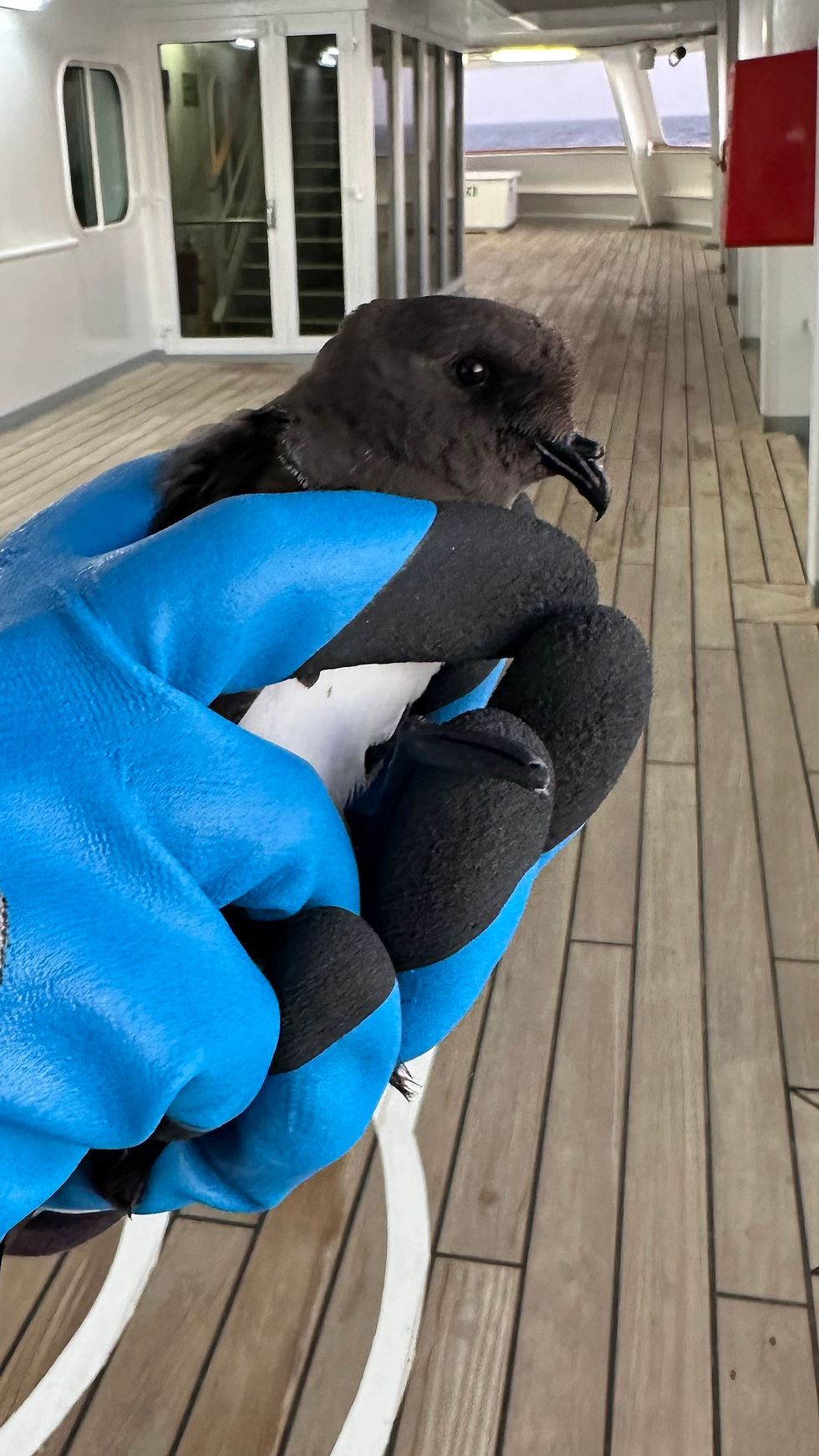
It was a rather exciting early morning start with the finding of two White-bellied Storm Petrels on Deck 3! Both birds were safely released back out to sea. It’s interesting to note that up until this point we had not recorded any White-bellied Storm Petrels during the many hours of daylight marine observations and did not record this species again. So a somewhat unexpected find!
As the sun came up, we found ourselves in the port of Coquimbo. The OWE team joined a Fred Olsen day trip into the Limari Valley for some wine tasting, hoping that the oasis location could yield a few birds.
As well as tasting some rather lovely chilled white and red wines we saw several nice birds on our travels including a Short-eared Owl, Harris Hawk, Variable Hawk, White-tailed Kite, many Californian Quail, Chilean Swallows, Chilean Mockingbirds, Yellow-winged Blackbirds, Long-tailed Meadow Larks, a Tufted Tit-tyrant and best of all for the OWE team, an Oasis Hummingbird. We also saw numerous Common Degu, which are small rodents endemic to central Chile. Although they look like a combination of a squirrel, chinchilla and a mouse they are more closely related to guinea pigs and rabbits.
Oasis Hummingbird © James Phillips / OWEs Common Degu © James Phillips / OWE
On returning to the ship, we took a walk through the fish market to find Black-crowned Night Herons, Snowy Egrets, Peruvian Pelicans, a Hudsonian Whimbrel, Blackish Oystercatchers and Black-necked Stilts with a small group of Great Grebes out in the harbour. At one of the harbours wharfs a huge bull South American Sea Lion put on quite a show, appearing out of the shadows to growl at passersby.
All too soon we had to be back on the ship. As we awaited the evening sail away, the passengers were entertained watching by groups of Peruvian Boobies plunge diving close to the ship from Deck 8.
Once out of the harbour we quickly started seeing seabirds with Northern Royal Albatross, Buller’s Albatross and Salvin’s Albatross all recorded. Peruvian Diving Petrels again featured this evening with a number of birds seen well in flight from Deck 3. Other birds included Peruvian Booby, Guanay Cormorant, White-chinned, Masatierra and Juan Fernandez Petrels.
Peruvian Booby © James Phillips / OWE Juan Fernandez Petrel © James Phillips / OWE
Observations didn’t end there, as much later that evening we were able to observe firsthand the world’s only truly nocturnal gull, the Swallow-tailed Gull, actively feeding around the ship in almost total darkness. The species is a near endemic breeding bird of the Galapagos Islands. When not breeding, it is a totally pelagic bird ranging east and south far out to sea off the coasts of Ecuador and Peru. The gull’s large eyes are adapted perfectly for night vision, allowing them to feed in the darkest of nights on squid and small fish close to the surface of the sea. We watched at least 40 or more birds lit by the ship’s lights, appearing almost ghost-like, feeding close to the ship. They remained with us throughout the night. When dawn came, we saw the gulls drift away to presumably rest upon the sea, waiting to feed when dusk returned once more.
12th March 2026. At sea to Iquique.
We awoke to find ourselves in deep water this morning (2,000m depth of water in fact) where we continued to cruise for much of the day. Viewing conditions were good, and we spent most of the day wildlife watching from Deck 6.
Our marine wildlife observations certainly reflected being in deeper waters with the Cetacean highlights being six different Sperm Whales logged and a small pod of Long-finned Pilot Whales coming in close to the ship. Three Fin Whales were seen well from Deck 6 too. Common Dolphins featured, with several groups encountered including feeding groups involving 100 dolphins or more.
It was very enjoyable birdwise with a nice variety of seabirds seen. Highlights included a scattered group of 44 Buller’s Shearwaters in the first hour or so after sunrise, our first Elliot’s and White-faced Storm Petrels, a brief Kermadec Petrel, the first Nazca Booby of the cruise and three Red-billed Tropic Birds circling the ship late morning. We regularly disturbed small groups of roosting Swallow-tailed Gulls off the surface of the sea as we continued to cruise north. Being in deeper water and close to the Humboldt Current we were expecting to encounter Chatham’s Albatross and these superb albatrosses duly obliged with 17 logged, our first of the cruise. We also had multiple Buller’s and Salvin’s Albatrosses.
Two Hammerhead Sharks appeared down the port and starboard side of the ship with one being seen well by passengers. Flying fish were also a feature.
The Swallow-tailed Gulls joined us again after dark with feeding birds observed close to the ship throughout the night.
A check of the ship’s decks later in the evening revealed two White-faced Storm Petrels and a Masatierra Petrel - all were safely released back out to sea.
Long-finned Pilot Whales © James Phillips / OWE Hammerhead Shark © Simon Luckman Masatierra Petrel © James Phillips / OWE White-faced Storm Petrel © Jean Obray / OWE
13th March 2026. Iquique Harbour, visiting the Atacama Giant and sail away at 18:00hrs.
We arrived at Iquique Harbour just before sunrise on a still beautiful morning with clear blue skies and the sand cliffs of the Atacama Desert towering above Iquique.
The harbour was full of gulls and terns this morning. Inca Terns were everywhere with at least 1,000 birds present. The terns showing incredibly well, and very close to the ship harbour side.
Atacama Desert © James Phillips / OWE Atacama Giant © James Phillips / OWE
Judging by the number of juvenile Gray Gulls seen – 350 birds – they seemed to be having a good breeding season. We couldn’t find a single adult bird and wondered if they were all at their breeding sites. It’s amazing to think that the whole of world’s population of Gray Gull breeds far inland in the harsh heat of the Atacama Desert!
Belcher’s Gull was new for the cruise with many of these range-restricted gulls present around the harbour.
The OWE team joined a Fred Olsen day excursion into the Atacama Desert to view the Atacama Giant, a colossal prehistoric geoglyph located on the Cerro Unita Hill far out in the Desert. This was very enjoyable experience with fabulous close-up views of the Giant, set in an incredible desert landscape. Researchers believe the Atacama Giant to be a sophisticated celestial and astronomical calendar and possibly represents a deity, shaman or spiritual figure connected to fertility and rain.
Traveling to the giant, through the Atacama Desert, it looked like an incredibly harsh environment and so dry with very little vegetation of any description seen!
Once back onboard the ship we were able to get in position on Deck 6 ready for the early evening sail away at 18:00hrs. As we left, we observed a Marine Otter swimming across the harbour entrance.
Once out into the open ocean and into deeper water we quickly logged two Fin Whales. Bird observations included excellent views of both Nazca Booby and Cocos Booby. At different times both birds could be observed perched around the base of the flagpole at the bow of the ship!
Coco's Booby © James Phillips / OWE Nasca Booby © James Phillips / OWE Belcher's Gull © James Phillips / OWE Inca Tern © James Phillips / OWE Inca Terns © James Phillips / OWE
As darkness fell our ghost-like friends, the Swallow-tailed Gulls, returned once more to feed around the ship.
There was more excitement after dark with the discovery of the cruise’s first Hornby’s Storm Petrel on Deck 3 and another White-faced Storm Petrel was found too. Both birds were safely released back out to sea.
Hornby's Storm Petrel © Jean Obray / OWE Releasing a Hornby's Storm Petrel
Stranded seabirds on the decks of ships (particularly petrel species) after dark are a regular occurrence particularly in misty and foggy conditions. This happens because birds are disoriented by the ships’ lights. Once stranded on board it’s unlikely that the birds will be able to fly back out to sea unaided. Checking the decks and then releasing any stranded birds back out to sea allows the birds to reorientate back into their natural environment.
During the evening the ship was informed that due to a large sea swell, Arica Harbour was closed and we would be continuing directly on to Paracas to spend two days there.
14th March 2026. At Sea to Paracas.
This was one of those days which will live in memory for a very long time. A fabulous day of seabird observations, pretty much from sunrise to sunset and dusk. We were in deep water for most of the day, 1000+ metres and this was reflected in the seabirds we observed.
We were also able to spend all day on Deck 6 in fantastic viewing conditions with a gentle breeze.
The assemblage of seabird species seen was very exciting. It started with a small pulse of feeding Cook’s Petrels just after sunrise. The sea state was fantastic, allowing us to observe large numbers of storm petrels close to the bow of the ship. We logged thousands of storm petrels with conservative estimates of 2,000 Hornby’s throughout the day and at least 800+ Wedged-rumped Storm Petrels seen. We also had good counts of Markham’s and Elliot’s Storm Petrels and tens of White-chinned Petrels tracked with the ship throughout the day with easily 200 seen.
Hornby's and Wedge-rumped Storm Petrels Hornsby's Storm Petrel © James Phillips / OWE Wedge-rumped Storm Petrel © James Phillips / OWE
Swallow-tailed Gull © James Phillips / OWE Red-billed Tropicbird © James Phillips / OWE Buller's Albatross © Ted Humphreys Nature Salvin's Albatross © James Phillips / OWE
The number of Hornby’s Storm Petrels was a real highlight of the day’s observations. It is amazing to think that this Near Threatened storm petrel has only recently been discovered (2017) breeding far out in the Atacama Desert in natural rock cavities. The fact that the driest desert on earth is the natural home for this seabird is an amazing adaption by the species.
We then marveled as we watched the skua like Kermadec Petrel chasing and harrying numerous Hornby’s Storm Petrels in front of the bow. The evolutionary journey that this species has taken to evolve, not only to look like and mimic a skua but to act skua-like, twisting and turning chasing the storm petrels is truly incredible.
Real skuas also featured! With Pomarine, Arctic, Long-tailed and Chilean all seen plus American Black Terns, Grey Phalaropes, a Cocos Booby and a Red-billed Tropic Bird. The ship regularly disturbed roosting groups of Swallow-tailed Gulls, lifting off the sea as we passed.
We recorded five species of Albatross. Being in deeper water, Chatham’s Albatross featured once again with Buller’s Albatross, Salvin’s Albatross and Black-browed Albatross all seen.
But best was yet to come, as close to sunset the cruise’s first Waved Albatrosses came into view! Three huge birds appeared in front of the ship’s bow in quick succession showing well and coming down the port side, much to the relief of Jean and myself. This was our last full seaday, after which for us at least there would be no chance to see this fabulous seabird again on the cruise. Incredibly the Waved Albatrosses were our 33rd species of Tubenose (Albatrosses, petrels and shearwaters) on this leg of the cruise!
Cetaceans didn’t take centre stage on this day, but Common Dolphins were seen in good numbers with over 1,000 logged, most of the time distantly. However, many passengers were able to connect with multiple groups of dolphins coming into the bow.

As the sun finally set a small group of Swallow-tailed Gulls appeared at the bow and flew low over Deck 6, showing superbly to everybody present. A fitting end to a fabulous day of observations.
15th March 2026. Paracas Day 1
An early morning search of the decks for any stranded storm petrels revealed another Hornby’s Storm Petrel on Deck 3. The bird was safely released back out to sea.
We now found ourselves in Peru and dock side in Paracas at 08:00hrs. We were excited to start exploring this wonderful area over the next two days.
On our first day we explored Paracas and any areas of coastal habitat in the coastal resort that looked promising for wildlife. Several passengers made similar explorations and shared sightings.
Migrating shorebirds were much in evidence with large numbers of Semi-palmated Sandpipers present moving with the tides to feed and roost along the shoreline. There were also smaller numbers of Western Sandpipers, Least Sandpipers, Semi-palmated Plovers, Spotted Sandpipers, Sanderlings, Ruddy Turnstones, Grey Plovers, Hudsonian Whimbrels and American Oystercatchers.
Several of the Semi-palmated Sandpipers were colour ringed with yellow flags. These flagged birds form part of a long-term study of this species in the Paracas National Reserve. Over a period of five years, 1,963 birds were caught and individually marked, which has produced regular re-sightings. A key finding from the study using information provided from the flagged birds showed that 28% of first year Semi-palmated Sandpipers remain in Paracas instead of migrating north. In contrast, 19% of adults remaining in Paracas instead of migrating to breed in the high Arctic in Alaska and Canada. The number of adults birds remaining in Paracas was surprising, suggesting that there was a benefit for the adult birds in not migrating and breeding in certain years. For more on this fascinating study have a look at Graham Appleton’s blog WaderTales.
Amazelia Hummingbird © James Phillips / OWE American Oystercatcher © James Phillips / OWE Semi-palmated Sandpipers © James Phillips / OWE Hudsonian Whimbrel © James Phillips / OWE Peruvian Pelicans © James Phillips / OWE Juvenile Gray's Gull © James Phillips / OWE
The harbour was full of birds with numerous Peruvian Pelicans and Guanay Cormorants commuting between different fishing locations. Belcher’s and Franklin’s Gulls were a real feature this afternoon with over 1,000 of each seen. Many Franklin’s gulls were in full summer plumage, and it felt they were on the move north. As we watched Franklin’s Gulls, a large group of Black Skimmers appeared and started to fish in the harbour shallows. Feeding birds came in close to where we were standing, giving us wonderful opportunities to observe firsthand their feeding techniques and the way they use their uniquely adapted bill.

Later, we had a final evening stop at one of the hotels along the seafront for an enjoyable Pisco Sour (the national drink of Peru). The hotel grounds were lovely with several Amazilia Hummingbirds on territory and numerous West Peruvian Doves and Yellow-winged Blackbirds watching on.
After dark we encountered several Hyles annei Sphinx moths on Deck 3. The species is a neotropical hawkmoth found in western regions of South America, including the Atacama Desert region in Northern Chile.
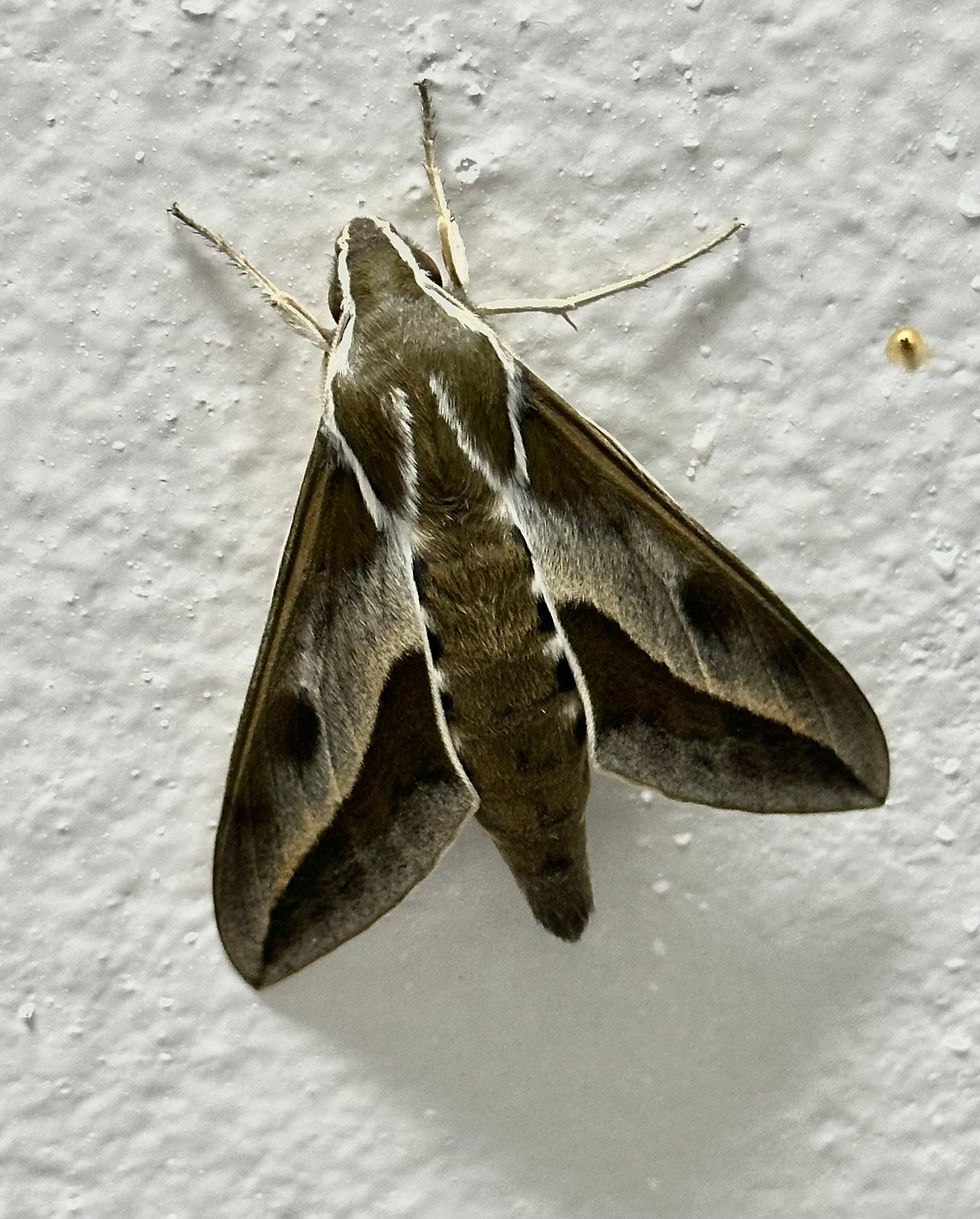
16th March 2026. Paracas Day 2 - National Reserve, Ballestas Islands and Pisco.
We returned to Paracas again this morning. But this time we were taking a boat trip out to view the Ballestas Islands, followed by some local guided birding in the Paracas National Reserve and out along the coast to the coastal town of Pisco.
It was a beautiful morning as we headed out towards the Ballestas Islands. We hugged the coastline and our first stop was to view the Paracas Candelabra (also known as the Candelabra of the Andes), a massive, prehistoric geoglyph which is etched into a sandy hillside on the northern face of the Paracas Peninsula. It was impressive! It measures over 180 metres tall and is carved up to 2 metres deep into the ground and can be seen up to 12 miles out to sea. The exact reason for its creation remains one of Peru’s great mysteries. Theories include a navigational beacon or a structure of religious symbolism. Another widely discussed theory is that the figure depicts the San Pedro Cactus or Jimson Weed – plants known for their sacred and shamanistic properties. Nesting Peruvian Boobies and Inca Terns looked stunning sitting on the surrounding sea cliffs in the beautiful morning light.
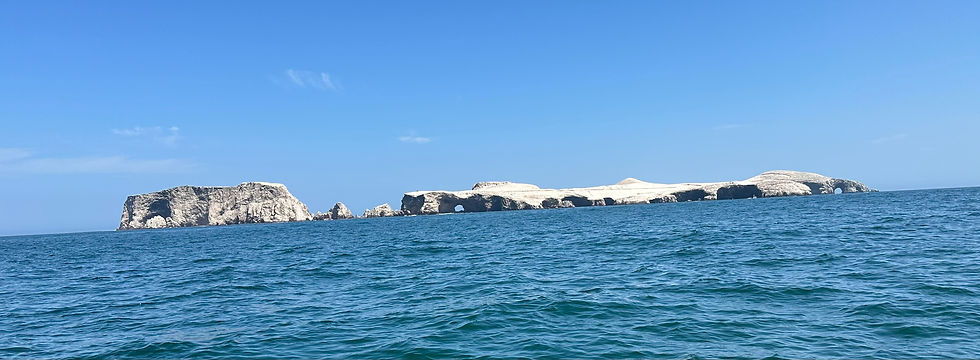
Soon we were at the Ballestas Islands. The skipper expertly navigated the boat around the various outcrops and caves giving everybody on board wonderful views of the thousands of Inca Terns, Peruvian Boobies breeding on the islands. There were good numbers of Humboldt Penguins too, looking smart standing in scattered social groups high up on the top of the cliffs. Red-legged Cormorants were everywhere and showed beautifully on the cliffs as we passed close by. A large nursery of South American Fur Seal pups was very active in one of the sheltered bays. Two different Peregrine Falcons were seen well, one perched in a cave. Blackish Oystercatchers made their presence known, perched up and calling from various rock outcrops.
American Royal Tern © James Phillips / OWE Peruvian Booby © James Phillips / OWE Inca Terns © James Phillips / OWE Franklin's Gull © James Phillips / OWE
Humbolt Penguins © James Phillips / OWE Red-legged Cormorant © James Phillips / OWE South America Fur s © James Phillips / OWE
We also sadly noted the 100s of empty nests of Guanay Cormorants on the islands. This species has suffered badly from Avian Bird Flu in recent years.
The Ballestas Islands were very popular with passengers during our stay with many taking the boat trip out to view the seabird colonies on both our days in Paracas.
Soon our visit was over, and the boat headed back to Paracas. Once ashore, we birded the wider area, including a couple of hours in the Paracas National Reserve. We were pleased to see more Guanay Cormorants here but the standout bird was a pair of Peruvian Thick-knees. These amazing shorebirds gave us wonderful views, looking decidedly cat-like as the birds stood under bushes sheltering from the searing heat.

Peruvian Thick-knee © James Phillips / OWE Spotted Sandpiper © James Phillips / OWE Semi-palmated Plover © James Phillips / OWE Least Sandpiper © James Phillips / OWE
We then birded several small wetlands along the coast to Pisco through the afternoon and into the early evening. We saw American Royal Terns, several Elegant Terns, a Gull-billed Tern, Sandwich Terns (Cabot’s), and more Franklin’s Gulls. One wetland held a nice selection of waterfowl including Cinnamon Teal, White-cheeked Pintail, Andean Duck, Pied-billed Grebe, Slate-colored Coot, Striated and Little Blue Herons, Plumbeous Rail and more shorebirds. An injured Peruvian Diving Petrel was an unexpected encounter. The petrel was seen briefly on one of the beach pools before it fluttered and flapped back along the sandy beach into the sea where it was lost in the surf!
We returned to the ship ready for the after dark sail away. Once on board we heard of a pod of Bottle-nosed Dolphins having been seen out in the bay earlier in the day, which was a nice way to end a fabulous couple of days in Paracas!
17th March 2026. Callao Harbour.
We awoke to find ourselves in Callao Harbour, our final stop. A final early morning deck walk produced another Hornby’s Storm Petrel on Deck 3, which was released back out to sea safely and unharmed.
And that was it! What a wonderful two weeks it had been! We said goodbyes to those passengers we managed to see that morning. We then handed over the baton to Pete and Jeff virtually as we had to disembark before they arrived ready for the next leg of this fabulous cruise…


Comments